Articles

The latest news, reviews, technologies and resources.

Search
Categories
All
Choose date
Order By
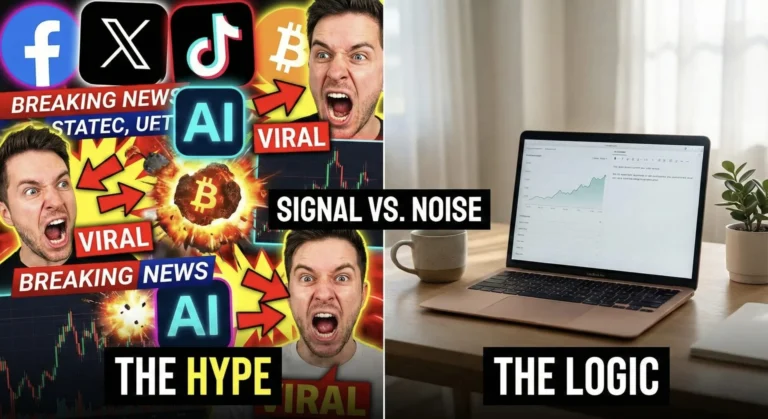
Image showing Hype versus Logic. On the left are thumbnails of YouTubers with their "shocked" faces and other social media logos. On the right shows the calm of logic.
Logic Over Hype: How to Choose Digital Tools Without the Noise
  • Productivity
  • Visual Programming
  • Workflow

Open YouTube right now. What do you see?

Likely a grid of thumbnails featuring people making shocked faces, overlaid with text that screams: “This new AI model is INSANE,” “Next.js 16 changes EVERYTHING,” or “Use this tool to become a millionaire by Tuesday.”

If you are a creator, developer, or business owner, this constant barrage of “game-changing” tech induces a specific kind of anxiety. You feel like if you aren’t rewriting your codebase every weekend or switching productivity apps every month, you are falling behind. You feel like you are missing the boat.

Here is the truth: You aren’t missing the boat. You are just drowning in noise.

Most of what we see online isn’t objective advice; it is a mixture of enthusiasm, algorithm-chasing, and—very often—sponsored content designed to sell you a shovel during a gold rush. Constantly shifting your toolkit based on the “hype cycle” is the fastest way to kill your actual momentum.

It is time to replace FOMO (Fear Of Missing Out) with logic. In this post, we are going to look at how to spot “manufactured hype,” why “boring” technology is often your best bet, and I’ll give you a 3-step framework to decide if a new tool actually deserves a place in your stack.

Meme of guy walking with his girlfriend, being distracted by another - making his head turn! The image represents a developer getting his head turned by another framework nearing the end of a project!


The Hype Dictionary: Decoding “Must-Watch” Titles

First, we need to acknowledge the reality of the internet: content creators are fighting a war for attention. They aren’t villains; they are just trying to survive the algorithm.

If they title a video “A modest update to a vector database,” nobody clicks. If they title it “This AI Database is INSANE,” they get views. I don’t blame them for playing the game. But as a consumer, you need to know how to translate “Algorithm Speak” into “Developer Reality.”

Here are 5 common phrases you’ll see, and what they usually mean in the real world:

1. “The [Popular Tool] KILLER”

  • The Headline: “Is this new framework the React Killer?” / “The End of Google?”

  • The Reality: No tool “kills” a giant overnight. Technologies die slowly over decades (banks still run on COBOL, after all).

  • The Translation: “This new tool is a promising alternative with some cool modern features, but the ‘old’ tool is still fine to use.”

2. “This Changes Everything”

  • The Headline: “GPT-5 Changes Everything Forever!”

  • The Reality: Progress is usually iterative, not revolutionary. Even the biggest leaps (like the iPhone or LLMs) took years to fully integrate into daily workflows.

  • The Translation: “This update introduces a feature that removes one annoying bottleneck I used to have.”

3. “Stop Using [X]”

  • The Headline: “Stop using useEffect immediately!”

  • The Reality: Nuance is the enemy of the thumbnail. Usually, the advice applies to a specific edge case, not your entire codebase.

  • The Translation: “Here is a specific scenario where this common pattern causes performance issues, but for 90% of you, it’s probably fine.”

4. “Insane / Mind-Blowing”

  • The Headline: “The speed of this new bundler is INSANE.”

  • The Reality: Humans are bad at perceiving millisecond differences. “Insane” usually means “noticeably faster in a benchmark test.”

  • The Translation: “I ran a speed test and the numbers are lower. You might save 3 seconds per build.”

5. “Make $X With This Tool”

  • The Headline: “How I built a SaaS in 24 hours with No-Code.”

  • The Reality: The tool didn’t build the business; the person’s years of market knowledge, design skills, and audience building did.

  • The Translation: “This tool lowers the barrier to entry, but it doesn’t do the hard work of finding customers for you.”

The Takeaway: Don’t hate the player, just understand the game. When you see these titles, mentally delete the adjectives. “This AI is INSANE” becomes “Here is a video about an AI tool.” Now, ask yourself: Do I care about that topic? If yes, click. If no, scroll on.


The Tale of Two Developers: Hype vs. Logic

Once you filter out the external noise, you need to look at your internal mindset. Are you building to solve problems, or are you building to use cool tools?

To visualize the difference, let’s look at two different approaches: Hype-Driven Development (HDD) versus Logic-Driven Development (LDD).

Feature Hype-Driven Development (The Trap) Logic-Driven Development (The Goal)
Primary Goal To use the newest technology available. To solve a specific user problem efficiently.
Tool Selection Based on YouTube thumbnails and Twitter trends. Based on stability, documentation, and specific needs.
Reaction to Updates “Version 5.0 is out! We must rewrite the app now!” “Version 5.0 is out. Let’s wait for the bug fix (v5.1).”
The “Boring” Tech Viewed as outdated or “legacy” trash. Viewed as reliable, battle-tested assets.
End Result A fragile project glued together by tutorials. A stable product that actually ships.
Mental State High Anxiety (FOMO). Peace of Mind.

Gartner Hype Image

Notice that the Logic-Driven approach isn’t anti-technology. It just moves slower than the hype cycle. As the Gartner Hype Cycle shows, technologies go through a “Peak of Inflated Expectations” before crashing into a trough. The Logic-Driven developer simply waits for the technology to reach the “Plateau of Productivity” before betting their business on it.


A 3-Step Framework for Choosing Tools Logically

So, you watched the video. The influencer says the tool is “magic.” The landing page looks incredible. How do you decide if you should actually use it?

Before you sign up or run npm install, run the tool through this 3-step logic filter.

1. The “Pain First” Test

Most of us fall into the trap of finding a cool tool and then looking for a problem it can solve. This is backward.

The Rule: Never adopt a tool unless you can articulate the exact pain point it solves in one sentence.

  • Bad Logic: “This new project management app has AI auto-tagging. That sounds cool, maybe I should migrate my whole team over.”

  • Good Logic: “My current Trello board is so cluttered that my team is missing deadlines because they can’t see high-priority tasks. I need a tool with better filtering.”

If you don’t have a pain point, you don’t need the tool. You are just procrastinating by “optimizing.”

2. The “Lock-In” Check

New tools (especially in the AI and JavaScript ecosystems) pop up and vanish overnight. Building your workflow or business on a shaky foundation is risky.

Ask yourself: “If this company goes bust in 6 months, how ruined am I?”

  • High Risk: A proprietary tool that stores data in a unique format you can’t export. If they shut down, you lose everything.

  • Low Risk: A tool based on open standards (like Markdown, SQL, or CSV). Even if the tool dies, your data is safe and portable.

Pro Tip: Always check the “Export” features before checking the “Features” list.

3. The “Time-to-Value” Ratio

Influencers rarely talk about the learning curve. They show you the finished result, not the 40 hours they spent configuring the settings.

You need to calculate the ROI (Return on Investment) of your time.

  • Does this tool save you 5 minutes a day?

  • Does it take 20 hours to learn and set up?

If it takes 20 hours to set up but only saves 5 minutes a day, it will take you 240 days just to break even on your time investment. Unless you plan to use this tool for years, sticking with your “boring,” imperfect current setup is often the mathematically superior choice.

Flowchart of a Software adoption checklist and flowchart.


Conclusion: Focus on the Mission, Not the Hammer

There is nothing wrong with loving technology. I love technology! But we must remember that tools are just that—tools. They are hammers, drills, and saws.

A carpenter doesn’t buy a new hammer every week because “Hammer 2.0” just dropped. They buy a hammer that works, and then they focus on building the house.

The next time you feel that surge of FOMO because a YouTuber said a new tool is “Insane,” take a breath. Apply the filter. Translate the title.

If it passes the test? Great, use it to build something amazing.

If not? Close the tab and get back to work.

What is one “hyped” tool you regret wasting time on? Or one “boring” tool you absolutely love? Let me know in the comments below—I read every one!

View

Useful Solutions

Empowering creators with visual programming and automation tools.

Useful Links

Contact

Got a question? Send a message:

© Useful Solutions 2026. All Rights Reserved.